Kazakh Horses: Traditional Classification and Terminology


The Kazakh horse has been bred and utilized since ancient times, with its specific characteristics shaped by the diverse environments in which it is raised.
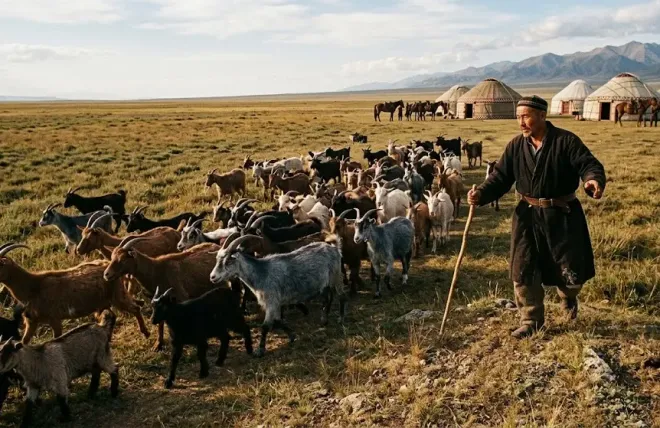
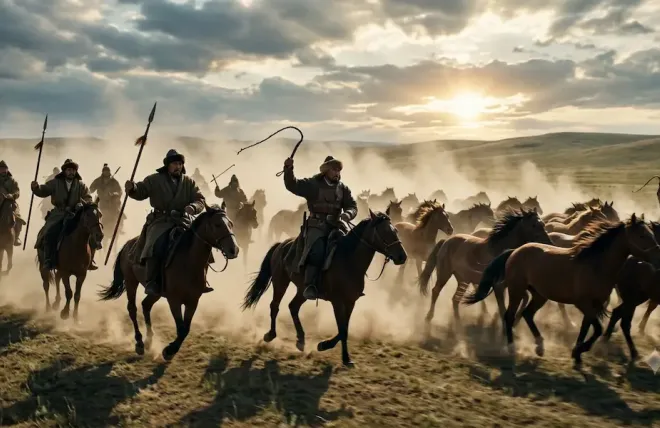
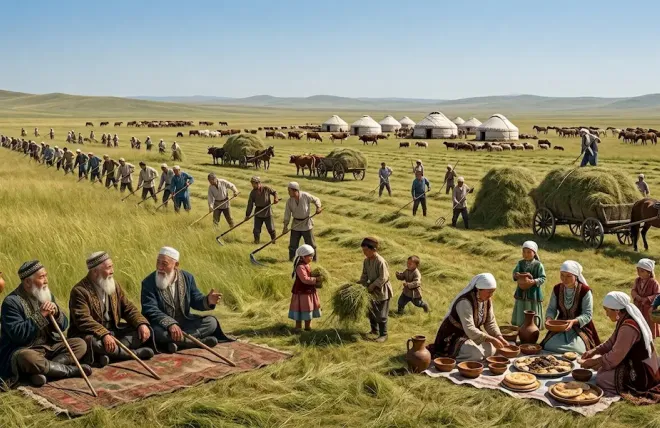
While not exceptionally large, Kazakh horses are exceptionally well-developed in terms of endurance, meat and milk production, and physical strength. In line with the traditional nomadic way of life, the Kazakh people manage their horses in herds (uiir), selecting the finest stallions to lead them. A strong stallion protects its herd throughout the year, keeping them together and defending them from predators. Several herds may be combined to form a larger group known as a tabyn (or kos), which can consist of 500 to 1,000 horses. The stability and size of the herd are largely dependent on the strength and leadership of the stallion.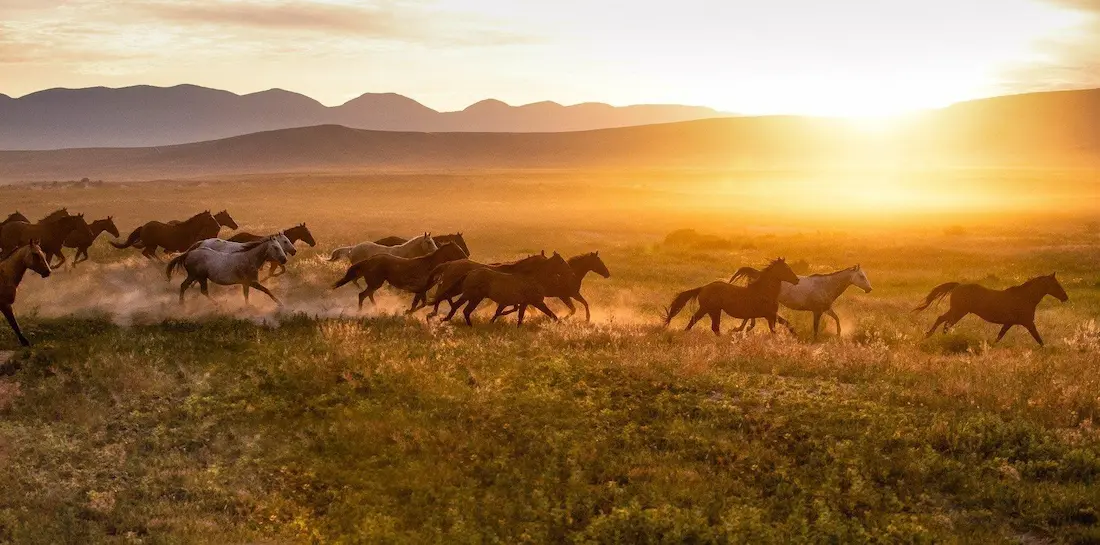
From April to mid-July, a healthy stallion brings the mares into his herd for mating. During this period, mares that were previously pregnant give birth; those in good condition conceive early, while mares in poorer condition conceive later in the season, resulting in "late" foals.
Mares have a gestation period of about 11 months. A high-quality stallion can manage a herd of 25 to 30 mares. An ungelded horse is typically ready to lead a herd at four years of age, while fillies (baital) usually conceive by the time they reach their third year (donezhin).
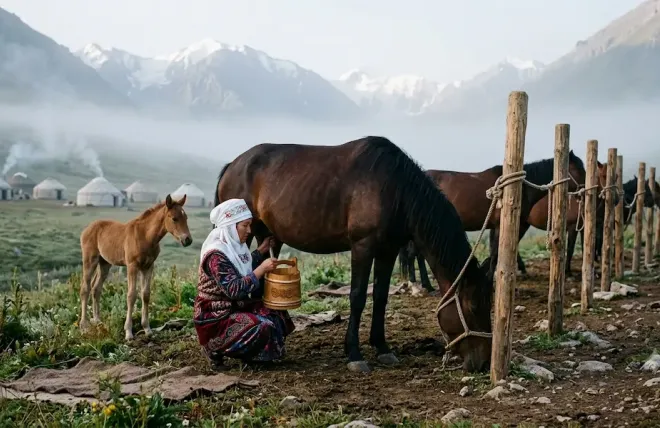
When foals are strong enough, mares are tied up and milked four to five times a day. Younger mares that have foaled for the first time are often left to graze for the first few weeks before being gradually introduced to the milking cycle, usually 2 to 3 times a day. Kazakhs typically milk their mares for up to six months.
Starting in April, foals (kulyn / zhabagy), two-year-olds (tai), three-year-olds (kunan), fillies (baital), and barren mares are groomed by trimming their manes and tails (kuzew). For barren mares and fillies, the mane is trimmed, while the tail is cropped in two sections. For three-year-olds, only the mane is trimmed, leaving the tail untouched. For foals, the mane is cut evenly, and a small tuft is left on the tail to serve as a fly-whisk.
Kazakh horses are remarkably hardy, demonstrating great stamina for riding and various forms of labor. They are categorized based on their usage, origin, breed, color, physical traits (such as mane and tail structure), and gait. Among Kazakh horses, one can find steady amblers (aiangshyl-zhorga), fast trotters, swift racers, and slower, heavy-duty horses. They are classified by their daily functional roles: as riding mounts, beasts of burden, or dairy producers. This utility-driven approach has led to a vast and specialized vocabulary for describing horses in Kazakh culture.
This text provides a detailed overview of the various horse breeds found in Kazakhstan, ranging from indigenous breeds shaped by the steppe to imported and crossbred varieties. It also outlines the traditional Kazakh classification system based on age, gender, and status.
Horse Breeds in Kazakhstan
Indigenous and Specialized Breeds
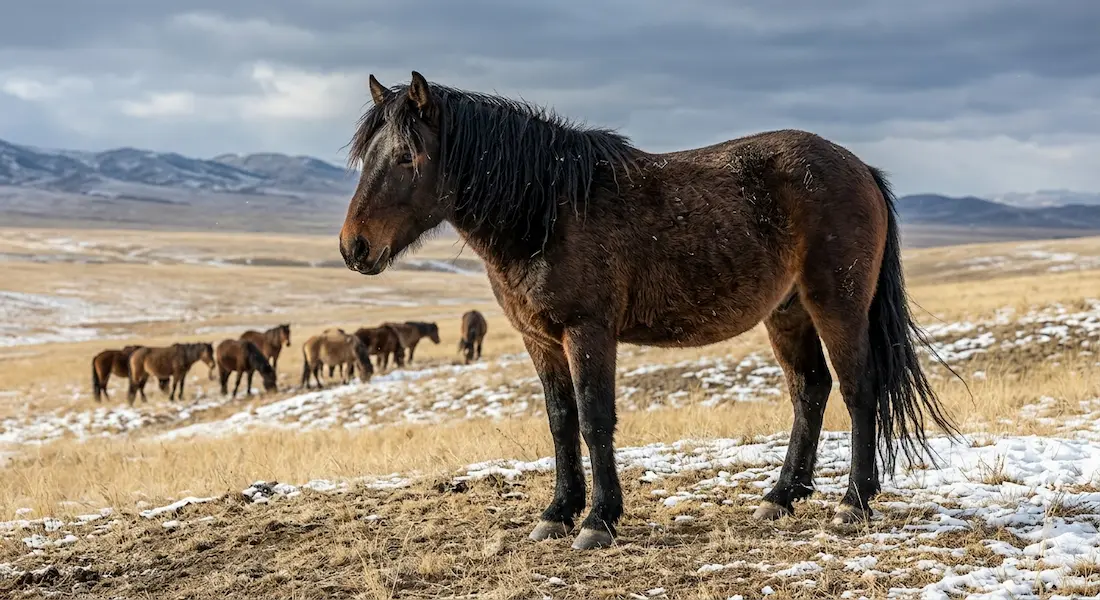
- Kazakh Horse: A rugged breed resilient to all weather conditions and undemanding regarding fodder, having evolved through year-round grazing on the open steppe (tebin). They have a large head, broad jowl, medium height, and powerful, well-defined tendons. They are exceptionally hardy with strong hooves and thick coats.
- Zhabe: A sturdy, thickset breed with a long body and short legs. They are agile, resilient, and possess great stamina for both riding and draft work.
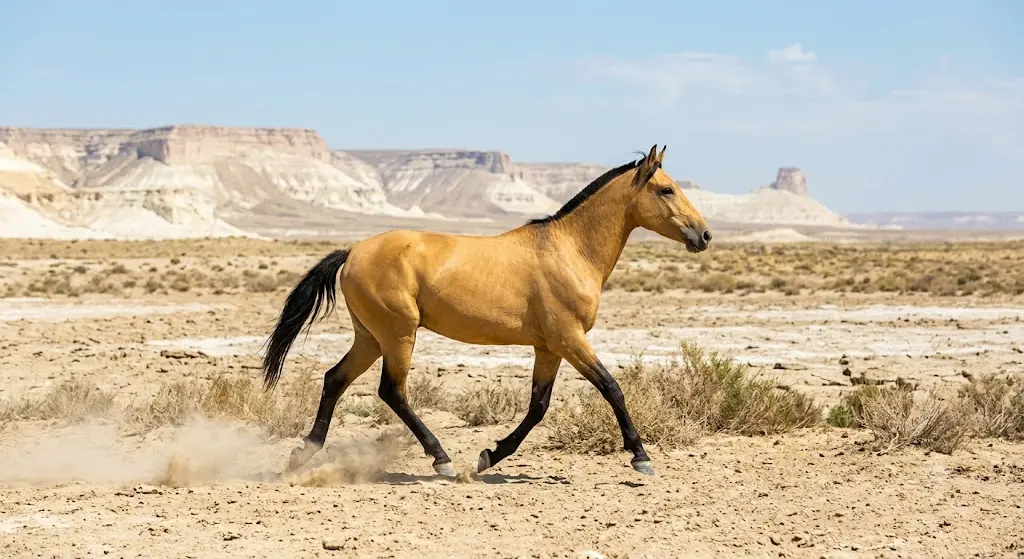
- Aday Horse: A desert-adapted variety of the Kazakh horse originating from western Kazakhstan, refined for riding. They are known for their speed, endurance, ability to survive in arid environments, and tolerance for drinking saline water. Characterized by a light head, well-defined withers, and slender, sinewy legs.
- Koshim Horse: A versatile work breed with a harmonious build—high withers, a broad chest, and a level back. They are valued for their stamina and are noted as excellent dairy producers.
- Kostanay Horse: Officially recognized in 1951, this breed resulted from crossing local Kazakh horses with purebred Don riding horses. They are well-adapted to local conditions, possessing great speed and strength, making them ideal for both riding and pulling.
Imported and Crossbred Breeds
- Budyonny Horse: One of the finest breeds developed in the region, named after Marshal S.M. Budyonny. It is a cross between purebred riding stallions and Don mares. They are large, powerful, and have a noble, athletic build.
- Don Horse: Originating from the Don River region, they are highly resilient to harsh climates. They are distinguished by their straight or slightly ram-headed profile, strong hooves, and powerful physique, making them excellent riding horses.
- Akhal-Teke: One of the oldest breeds in existence. They are elegant, slender, and fragile in appearance, with silky manes and thin skin. They do not thrive in open-range grazing or extreme cold but are incredibly fast and resilient in hot, arid, desert environments.
- Purebred Riding Horse (Thoroughbred): Used primarily for racing and improving local bloodlines. They are highly graceful and athletic but require intensive care and high-quality feed.
- Orlov Trotter: Developed 150 years ago in the Voronezh region, these horses are famous for their elegant "swan necks," high withers, and large, sturdy build. They have been instrumental in increasing the size and speed of local horses.
- Russian Trotter: A cross between Orlov mares and American trotting stallions. They are smaller and more compact than the Orlov, with dense muscle mass and long, powerful legs.
- Soviet Heavy Draft: A powerful breed designed for pulling heavy loads, characterized by a massive build, thick neck, and sturdy legs.
- Russian Heavy Draft: A medium-sized, long-standing breed known for its robust chest and calm temperament.
Traditional Classification of Kazakh Horses
In Kazakh culture, horses are categorized by gender, age, reproductive status, and training.
General Categorization: The herd is traditionally divided into groups: mares (bie), stallions (aigyr), geldings/bachelors (saiak), fillies (baital), four-year-olds (donen), five-year-olds (besti), foals (kulyn), yearlings (zhabagy), and two-year-olds (tai).
Herd Structure Breakdown:
- Mares:
- Mares with foals.
- Foals.
- Barren mares (kysyrak / virgin fillies).
- Stallions and Geldings:
- Stallions.
- Saiak (uncastrated young bachelors or geldings).
Cultural Notes
- The Tebin System: This refers to the ability of horses to graze in winter by digging through the snow with their hooves. It is the defining survival trait of the indigenous Kazakh horse, allowing them to remain on open pasture year-round.
This list provides a rich look at the specialized vocabulary used in traditional Kazakh culture to describe a horse’s physical condition, temperament, build, and overall health. These terms illustrate the deep expertise nomads developed through their intimate relationship with the horse.
General Terminology for Horses
Physical Condition & Health
- Takumga baskan at: A horse raised and groomed from a young age, personally owned and favored by an individual.
- Zhabyk etti zhylky: A horse in average condition; not overly fat, but lacking excess muscle definition.
- Barlykkan zhylky: An animal ridden so hard while fat that it is on the verge of exhaustion (kyzyl mai — literally "red grease/fat," referring to the animal being pushed to the point of breaking its internal fat reserves).
- Sa bylgan zhylky: A horse that has been ridden to the point of lathering, covered in white foam.
- Soktykkan zhylky: A horse completely exhausted due to prolonged illness or overwork.
- Koterem zhylky: A horse so emaciated and weak that it cannot stand on its own and requires human assistance to rise.
- Katpa zhylky: A gaunt, skeletal horse whose bones protrude sharply through its skin.
- Zhorykkan zhylky: A horse that has collapsed from exhaustion during a journey and can no longer travel.
- Kok baka zhylky: An extremely thin, "bony" horse—literally, a horse that has no meat on its joints.
Build & Anatomy
- Er arka zhylky: A horse with high withers and a deep saddle area (concave back).
- Siyr kuymshak zhylky: A horse with a straight back, where the slope starts only at the root of the tail.
- Astau zhondy zhylky: A horse with prominent muscles on both sides of the back, creating a "trough" shape.
- Tik zhondy zhylky: A horse with a straight, continuous line from the withers to the rump.
- Kakpak zhondy zhylky: A horse with a solid, broad back that blends into the ribcage.
- Eshki bas / Koi bas: Horses whose heads resemble a goat or a sheep, respectively.
- Orak basty zhylky: A horse with a prominent nasal bridge and a "hooked" (aquiline) nose.
- Kamys kulak: A horse with erect, sharp, spear-like ears.
- Kaishy kulak: A horse that "scissors" its ears back and forth while moving.
- Mastek kulak: A horse with ears that droop or tilt toward the sides.
- Tulpar: A legendary, mythical-tier horse; the fastest, most tireless racer in folklore.
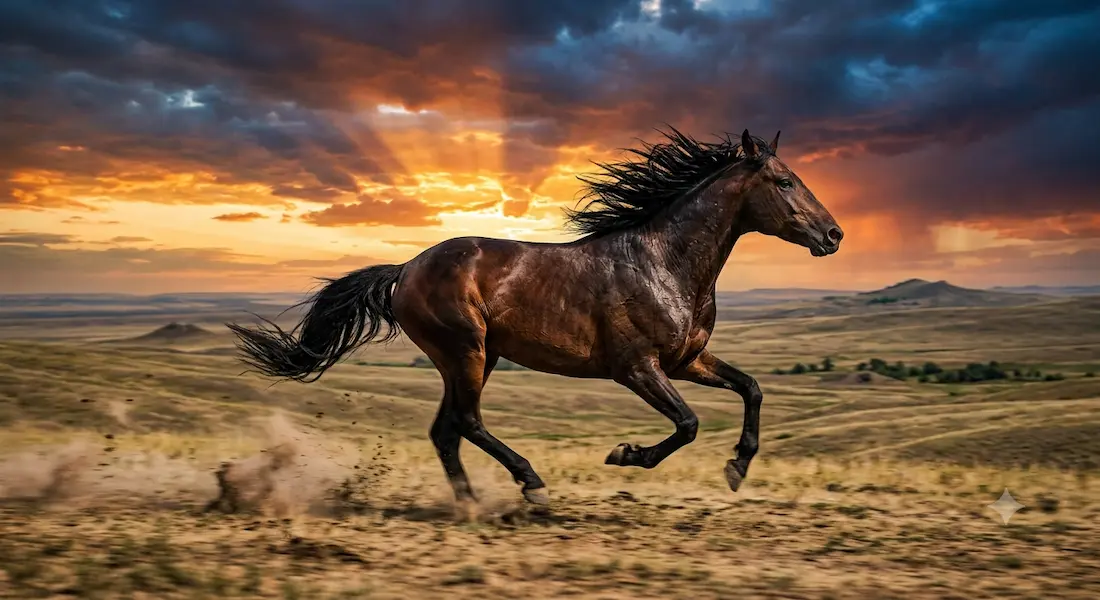
- Zhel zhetpes / Ok zhetpes: The absolute fastest of tulpars—so fast that "not even the wind or an arrow" can catch it.
- Saigulik: A top-tier racehorse that rarely loses a competition.
- Duldil: A term often used interchangeably with tulpar, denoting an exceptionally eloquent or gifted horse.
- Tarpan: A wild, flighty, or skittish horse that kicks, bites, and is difficult to approach.
- Kyzba (Zhelik): A spirited, "hot-blooded" horse that gets easily excited or agitated at gatherings or festivals.
- Kerenau (Kerden): A sluggish horse that does not walk with a lively gait.
- Tesegen: A young horse (three-year-old or foal) whose new permanent teeth are coming in unevenly, causing pain and preventing it from grazing properly, leading to temporary weight loss.
- Kolau: A young horse (yearling or three-year-old) that has been ridden too heavily too soon, causing it to suffer from "dropped hands" (lameness or injury in the front legs).
- Maimak: A horse born with crooked or "bow-legged" limbs.
In traditional Kazakh culture, a horse’s teeth are the primary indicator of its age, health, and vigor. Kazakhs have developed a precise veterinary vocabulary to describe the developmental stages and wear patterns of these teeth.
Terminology of Horse Teeth
- Sut tis (Milk tooth): The primary teeth that appear when a foal is still nursing.
- Kurek tis (Incisor): The shovel-shaped front teeth on the upper and lower jaws used for biting.
- Zhulsar (ot) tis (Grabbing/Grazing tooth): The teeth used for pulling and shearing grass.
- Kaska tis: The very front incisors.
- Shet tis: The teeth positioned immediately next to the incisors.
- Turaqty tis (Permanent tooth): The secondary, permanent teeth that replace the milk teeth between the ages of two and five.
- Ukpe tis (Molar): The large cheek teeth used for grinding.
- Ury tis (Rogue/Thief tooth): An extra-long molar that sometimes grows alongside the regular molars. When this appears, it often prevents the horse from grazing properly, leading to severe weight loss.
- Kyrkylgan tis (Worn tooth): A state where the ridges of the teeth begin to flatten and smooth out due to constant grazing.
- Tiseu (Teething): The process of the milk teeth falling out to make room for permanent ones.
- Kos tis (Double tooth): A tooth that emerges parallel to or alongside a primary milk or permanent tooth.
- Mor (Impression/Mark): The natural indentations (infundibula) on the occlusal (chewing) surface of the incisors.
Stages of Wear (Determining Age by the Mor):
- Sopak mor (Oval mark): The shape of the dental indentation in horses aged 5 to 10 years, where the marks have not yet significantly worn down.
- Dongelek mor (Round mark): As the horse ages from 12 to 18 years, the oval marks gradually wear down and transform into a circular shape.
- Ushburysh mor (Triangular mark): From 18 to 23 years, the continued wearing and degradation of the dental surfaces cause the marks to take on a triangular shape.
- Kyr (Ridge): The outer edges or borders of the dental indentations.
Sounds, Gestures, and Behavioral Terms of the Horse
- Okyranu (Whinnying/Grumbling): A low, throaty sound made by a stallion during mating season, by a horse anticipating being unbridled, or by a mare calling tenderly to her foal.
- Kisineu (Neighing): The common, high-pitched neighing a horse makes when calling to its foal, when left tied or tethered alone, or when a stallion is searching for his herd.
- Oskyrynu (Snorting): The sharp, forceful sound a horse makes through its nostrils when it is startled, suspicious, or afraid of predators like wolves or dogs.
- Shurkyrau (Screeching/Panic neigh): A frantic, high-intensity vocalization signaling extreme terror, such as when a wolf attacks the herd or during a raid.
- Yklyktau (Submissive gesture): When a foal or young horse (yearling) feels intimidated by a mature, dominant horse and stretches its neck downward while rapidly chewing the air.
- Kisinei okyranu (Courting neigh): The specific, forceful call a stallion makes as he runs toward a mare in heat.
- Shynggyrysu (Muffled whinnying): The tender, soft vocalizations exchanged between a mare in heat and a stallion when they approach and smell one another.
- Yshkyna kisinei okyranu (Searching neigh): A stallion’s call when searching for his herd; it begins with a loud, powerful sound and gradually tapers off into segmented, softer whinnies.
- Aigyr talas (Stallion battle): The ritualistic fighting between stallions, characterized by smelling each other’s dung, pawing the earth, kicking, and biting.
- Inir zhusau (Evening rest): The period at twilight when the herd stops grazing to rest and stand quietly.
- Tun zhusau (Night rest): The period around midnight when the horses rest and stand still, pausing their grazing.
- Shynggyru (Screaming/Squealing): A piercing sound of distress, such as when a wild foal is lassoed, bridled for the first time, or physically attacked by a predator.
- Tanggy zhusau (Morning rest): The rest period just before dawn, after the horses have grazed their fill at night, where they stand to "settle" their stomachs before moving on.
- Oinaktau (Frolicking): Energetic play behavior. This occurs in spring when horses are invigorated by the new grass, or in autumn when the weather cools, leading them to spar, bite, and jump around playfully.
- Mengku (Bucking/Rearing): The behavior of a young horse (yearling or three-year-old) when it is first being broken for riding; it bucks, lowers its head, and kicks its hind legs high into the air to dislodge the rider.
Terminology for Rising, Lying Down, and Rolling
- Aldynan turu: The natural, healthy way for a horse to rise, lifting its forequarters first.
- Aldynan zhatu: The act of lying down by first bending the front knees (kneeling) before lowering the rest of the body.
- Siyrshylap turu: Literally "rising like a cow." This indicates that a horse is in a weakened, critical condition—it lacks the strength to lift its forequarters first and instead has to struggle up by pushing off its hindquarters.
- Aunau (Rolling): The act of a horse rolling on the ground—often on grassy, salty, or sandy soil—alternating from one side to the other with its legs in the air. This helps the horse clean its skin, relieve itching, and stretch its muscles.
- Yueleu: A dangerous, fatal condition where a horse falls into a ditch or an uneven depression and becomes stuck in an awkward position. Unable to stand up, the horse's stomach bloats (gases accumulate), its legs stiffen, and it eventually dies.
- Silkinu (Shaking off): The final stage after rolling; the horse stands up and violently shakes its body to shed dust, dry grass, or debris from its coat.
Kazakh Horse Coat Color Classifications
- Kara (Black): Solid black coat from root to tip, often with a glossy sheen.
- Sary (Yellow/Palomino): A solid golden-yellow coat across the entire body.
- Zhiren (Chestnut): A solid reddish-yellow or brownish-red coat.
- Tory (Bay): A brown or tan body with black mane, tail, and lower legs.
- Kok (Blue/Grey): Not a solid blue, but a coat composed of bluish or greyish hairs that give an overall "blue" appearance.
- Kara-kok (Dark Blue/Dark Grey): A horse with a very dark, deep grey or "blue-black" coat.
- Kyzyl-kok (Reddish-Blue/Roan): A blue/grey horse where the tips of the hairs have a reddish tint.
- Kula (Dun/Buckskin): A yellowish or golden body with black points (mane, tail, and lower legs) and a characteristic dark dorsal stripe running from the withers to the tail.
- Akjal (Pale Dun): Similar to the kula, but the mane, tail, and lower legs are light grey or "bleached" rather than black.
- Sur (Grullo/Mouse Dun): A light bluish-grey body with black points and a black dorsal stripe. They often feature zebra-like stripes on the shoulders and legs.
- Kara-ker (Dark Bay/Brown with shading): Primarily black in color, with lighter, brownish, or "dull" shading around the muzzle and flank.
- Shabdar (Palomino-Roan): A light yellow body with a "roan" (mixed light and dark) mane and tail. While light shabdar horses resemble tory (bay) horses, they are distinguished by their mixed-color manes.
- Ala (Piebald/Skewbald): A horse with large, irregular patches of white over a base coat color.
- Shubar (Appaloosa/Spotted): A horse with small, distinct spots or flecks of a different color (black, bay, chestnut) scattered over a white base, or white spots scattered over a dark base.
- Buryl (Roan): A base coat (such as chestnut or bay) mixed with white hairs throughout the body, though the head and lower legs usually remain the solid base color without white hairs.
- Shangkan / Boz (White/Light Grey): A horse with a pure white coat.
- Baran (Deep Bay): A specific shade of tory (bay) where the body and head have a deep, cherry-red hue, contrasted with black mane, tail, and legs.
- Kylang (Light Grey/White): A common term used specifically for horses that are light grey or white.
Terms Related to Coat and Shedding
- Oli zhun (Dead hair): The thick, heavy winter coat that a horse sheds in the spring.
- Tiri zhun (Live hair): The new summer coat growing underneath or through the winter coat.
- Tuleu (Molting/Shedding): The process of the horse shedding its winter coat as the new summer coat grows.
- Tulegen zhun (Post-molt): The state of the horse after April, when the winter coat has completely fallen off and the new coat has fully emerged.
- Kuzeu (Trimming/Clipping): The practice of trimming the mane and tail of barren mares, yearlings, and fillies in April or May.
- Kuzelgen (Trimmed): Used to describe a horse that has had its mane and tail trimmed during the spring.
Traditional Commands and Calls
- Kurau-kurau: A call used to bring a foal to its mother so the mare can be milked.
- Kur-r: A command used to make a horse stand still or wait so it can be haltered or bridled.
- Tak: A command given to an unbroken or young horse to encourage it to stand perfectly still while being saddled, bridled, or mounted.
- Moh-moh: A gentle call used to attract a horse’s attention and encourage it to come to the handler.
- Kurayt (Koyt-koyt): A call used to urge a mare to join a stallion’s herd.
- Tyr-r: A command used to bring a horse to a stop, whether it is being ridden, led, or harnessed to a cart/sledge.
- Kur bylai (Ai): A command used to herd stray horses back into the main group.
- Kur, zhanuar, kur: An affectionate call used to soothe a horse, urging it to stop gently without startling it.
- Kuroyt-kuroyt: A call used to encourage a stallion to mate with a mare in heat.
- Ai-hai, zhanuar, ai-hai: A versatile command used to calm a herd, prevent them from kicking or biting each other, keep them calm while watering, or settle them for the night to prevent panic.
- Zhamandatkyr: A mournful, despairing term used for a horse suffering from the fatal zhamandat disease.
Horse Diseases and Conditions
- Manka (Glanders): A serious, contagious disease characterized by a bloody, purulent nasal discharge and internal lesions.
- Kara okpe: A respiratory illness characterized by severe coughing.
- Shygu (Sakau): A condition in foals or yearlings where lymph nodes under the jaw swell and eventually rupture and heal on their own (often related to strangles).
- Shoiyrylma: A condition where the horse’s back becomes weak or perforated (historically attributed to "worms" in the spine).
- Karakaptal: An ailment affecting the stallion’s urinary/reproductive area, leading to sores and inflammation.
- Kienki: A urinary disorder in mares or fillies.
- Zhamandat (Septicemia): A severe blood infection that causes large, painful, tumor-like swellings across the body.
- Mandam: A toxic infection causing abscesses on the hooves, neck, or under the jaw.
- Bogymala (Mouse-pox): A bump or swelling that develops on the horse's bridge of the nose.
- Kyrshangky: A skin condition caused by extreme temperature changes (heat/cold stress) leading to severe itching, hair loss, and bleeding sores.
- Oli: A condition where a horse suffers from severe exhaustion or heatstroke, causing it to stumble and lose its appetite.
- Zhelin kurt: An infection of the mare's udder leading to swelling and abscesses.
- Zhelinisu: General inflammation (mastitis) of the udder.
- Sary auru (Yellow sickness): A condition in spring where a horse cannot properly digest old, dry grass, leading to fluid accumulation and death.
- Karyn auru (Colic/Abdominal pain): Various digestive blockages or distress caused by overeating or being worked hard while "full," leading to bloating, sweating, and restlessness.
- Arka ketu (Saddle sores/Back damage): Inflammation and suppuration of the horse's back due to improper saddle fit or being ridden when overheated.
- Zhalaq: A smooth, raw sore on the back caused by friction from the saddle.
- Shili kara: A chronic condition in horses that have previously had back sores; the tissue remains sensitive and re-injures easily.
- Lokky (Lonka): An advanced, necrotic stage of a saddle sore where the tissue becomes hard, swollen, and infected.
- Oli et (Dead flesh): Necrotic tissue that develops inside a severe, untreated saddle sore.
- Karadak: The hardened, scab-like layer of skin that forms over a chronic saddle sore.